
History




Architecturally,
Wyton
church
is
far
more
interesting
than
that
of
Houghton.
The
early
13th
century
north
arcade
is
particularly
fine
and
has
deeply
moulded
arches,
capitals
carved
with
stiff-leaf
foliage
typical
of
the
period
and
fine
pillars.
The
priest's
doorway
of
the
same
date
has
“dog-tooth"
moulding
on
either
side
at
the
springing
of
the
arch.
Of
particular
interest
is
the
13th
century
north
doorway
which
has
excellent
detail,
rebuilt
here
at
the
time
of
the
restoration.
It
has
a
pointed
head,
shafted
jambs
with
carved
capitals
and
on
the
modern
door
has
been
refixed
remarkable
strapwork
which came from the original door.
The
carving
at
the
chancel
arch
capitals
includes
a
realistic
leopard's
head,
the
font
is
modern
but
the
stem
and
base
are
15th
century.
In
the
east
window
is
some
old
glass,
one
piece
with
a
“sun
in
splendour".
On
the
chancel
wall
is
the
memorial stone of the Reverend Samuel Ainsworth (d. 1709) with a very long Latin laudatory inscription.
Wyton
church
was
closed
in
1974
and
declared
redundant.
It
was
sold
into
private
hands
in
1980
and
is
not
open
to
the
public.
Nor
is
there
a
public
footpath
through
its
churchyard,
although
the
public
do
have
access
to
the
extension
to
the
churchyard which is still church land, and is available for the burial of cremated remains.
The fittings of the church have been dispersed to various other local churches; a few are now in Houghton church.
Houghton Chapel Retreat
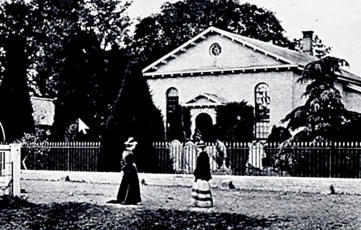
Houghton Chapel, C. 1878
This
building
formerly
a
Congregational
Chapel
and
now
belonging
to
the
United
Reform
Church,
stands
down
Chapel
Lane
next
to
the
school.
It
was
built
in
1840
by
the
joint
exertions
of
Potto
Brown
and
Joseph
Goodman.
It
is
an
excellent
and
typical
example
of
“chapel"
architecture
of
the
period,
unaffected
by
the
"Gothic"
revival.
Simple
in
design,
it
is
constructed
of
yellow
brick
and
is
rectangular
in
shape,
with
a
slightly
projecting
pedimented
entrance
portico, round-headed windows in each wall and a flat-pitched roof.
The
interior
has
been
recently
reconstructed
(1986)
to
create
a
30
bed
self-catering
residential
centre.
The
former
pews
used
to
slope
gently
towards
a
communion
table
and
pulpit.
Wood
from
these
has
now
been
made
into
fine
refectory
tables.
The
canted
gallery
at
one
end
has
been
carried
round
three
sides
to
house
bedrooms,
toilets
and
bathrooms.
The
dining
area,
which
serves
also
for
worship,
incorporates
the
recess
which
housed
the
organ.
The
lounge
keeps
part
of
the
coved
and
boarded
ceiling
with
one
of
the
full-length
windows,
in
a
very
handsome
space.
A
bronze
plaque,
mounted
next
to
a
new
open
fireplace
is
inscribed
"In
memory
of
Potto
Brown
and
Joseph
Goodman
whose
faith
in
God
and
zeal
for
Religion
inspired
the
erection
of
this
Meeting
House
in
1840
and
who
laboured
unceasingly
to
further
the
cause
of civil and religious liberty in the towns and villages of this County”.
The
former
adjoining
schoolroom,
slightly
extended,
now
houses
a
kitchen
and
further
bedrooms,
including
full
facilities
for
physically
handicapped
people.
The
grounds
contain
many
inscribed
memorial
stones
most
now
remounted
along
the
side
walls.
Those
commemorating
the
Brown
and
Goodman
families
remain
standing
behind
refurbished
railings
and
a
space for off-road parking.
THE CEMETERY
When
the
graveyards
of
the
two
churches
and
Union
Chapel
were
closed
it
became
necessary
to
find
a
suitable
piece
of
ground
to
take
their
place.
In
1905,
an
acre
of
land
was
bought
at
the
foot
of
Houghton
Hill,
which
at
the
time
was
a
somewhat
isolated
spot
as
no
houses
were
near.
It
contains
the
village
war
memorial
and
besides
those
of
villagers,
graves of allied airmen of World War II and since. The Parish Council keeps it in order.


HISTORY
Architecturally, Wyton church is far more
interesting than that of Houghton. The early
13th century north arcade is particularly fine
and has deeply moulded arches, capitals
carved with stiff-leaf foliage typical of the
period and fine pillars. The priest's doorway of
the same date has “dog-tooth" moulding on
either side at the springing of the arch. Of
particular interest is the 13th century north
doorway which has excellent detail, rebuilt
here at the time of the restoration. It has a
pointed head, shafted jambs with carved
capitals and on the modern door has been
refixed remarkable strapwork which came from
the original door.
The carving at the chancel arch capitals
includes a realistic leopard's head, the font is
modern but the stem and base are 15th
century. In the east window is some old glass,
one piece with a “sun in splendour". On the
chancel wall is the memorial stone of the
Reverend Samuel Ainsworth (d. 1709) with a
very long Latin laudatory inscription.
Wyton church was closed in 1974 and
declared redundant. It was sold into private
hands in 1980 and is not open to the public.
Nor is there a public footpath through its
churchyard, although the public do have
access to the extension to the churchyard
which is still church land, and is available for
the burial of cremated remains.
The fittings of the church have been dispersed
to various other local churches; a few are now
in Houghton church.
Houghton Chapel Retreat
Houghton Chapel, C. 1878
This building formerly a Congregational
Chapel and now belonging to the United
Reform Church, stands down Chapel Lane
next to the school. It was built in 1840 by the
joint exertions of Potto Brown and Joseph
Goodman. It is an excellent and typical
example of “chapel" architecture of the period,
unaffected by the "Gothic" revival. Simple in
design, it is constructed of yellow brick and is
rectangular in shape, with a slightly projecting
pedimented entrance portico, round-headed
windows in each wall and a flat-pitched roof.
The interior has been recently reconstructed
(1986) to create a 30 bed self-catering
residential centre. The former pews used to
slope gently towards a communion table and
pulpit. Wood from these has now been made
into fine refectory tables. The canted gallery at
one end has been carried round three sides to
house bedrooms, toilets and bathrooms. The
dining area, which serves also for worship,
incorporates the recess which housed the
organ. The lounge keeps part of the coved and
boarded ceiling with one of the full-length
windows, in a very handsome space. A bronze
plaque, mounted next to a new open fireplace
is inscribed "In memory of Potto Brown and
Joseph Goodman whose faith in God and
zeal for Religion inspired the erection of this
Meeting House in 1840 and who laboured
unceasingly to further the cause of civil and
religious liberty in the towns and villages of
this County”.
The former adjoining schoolroom, slightly
extended, now houses a kitchen and further
bedrooms, including full facilities for physically
handicapped people. The grounds contain
many inscribed memorial stones most now
remounted along the side walls. Those
commemorating the Brown and Goodman
families remain standing behind refurbished
railings and a space for off-road parking.
THE CEMETERY
When the graveyards of the two churches and
Union Chapel were closed it became
necessary to find a suitable piece of ground to
take their place. In 1905, an acre of land was
bought at the foot of Houghton Hill, which at
the time was a somewhat isolated spot as no
houses were near. It contains the village war
memorial and besides those of villagers,
graves of allied airmen of World War II and
since. The Parish Council keeps it in order.






















St Mary The Virgin


